Thursday, 16 June 2016

The delayed effect of anxiety on children: 'complete fabrication on the part of the parent'

My role is to see children with ASD, Selective Mutism and complex communication difficulties. I don't mean complex needs, I mean complicated profiles and even more complicated situations. Many of these children are very anxious. I know that the more complex the case, the more simple my explanation needs to be. Time and time again, I see parents who describe their child one way and schools who see something different and completely refute what the parent is saying, even if they have the scratches and bruises to confirm it.

It is described as a 'delayed effect' or the 'pressure cooker' situation. I like to see it as 'the bottle of pop phenomenon'. the child keeps it together, maybe doesn't like to draw attention to themselves or can 'just about manage' until 3.30pm. There might be small signs, that someone who who knows the child well or someone experienced in childhood anxiety can spot, such as slight eye or vocal tic or the picking at the skin on their thumb.Then when they get home all hell erupts. The bottle has been shaken all day and the top comes off at the door. The door where they feel safe and secure with a parent who understands them, won't judge them or hate them whatever they do.

I've had this reported 12 times in the last few months alone,  but there is little written about it which might help professionals understand that what they see isn't always the true picture:
  • the child with anxiety who smiles, so can't be worried at school
  • the child who is sweet and polite so can't have sworn uncontrollably at their mum last night
  • the timid, quiet child who can't possibly have inflicted those bruises because the lessons changed today
  • the 'normal' child who does as he's told can't be demand avoidant at home
  • The child who seemed happy for a new member of staff to take the class as he didn't say anything, can't have trashed the house when he got in
  • the girl who said nothing  in class can't possibly have had a melt down at home because they'd moved the cupboard to the other side of the classroom
  • the kind, helpful girl can't have scratched her mum so badly she drew blood when all she was trying to do was to give the ipad to a man to take to repair
  • the 'ideal pupil' who loves school can't really hang onto the door handle and fight both parents every single morning because he doesn't want a bath
These are all real cases and some of you reading this will know who I'm talking about.

It must be parenting, it must be the parent, the parent must be fabricating........ I think NOT!!! We need training for staff in spotting the (often well hidden) signs of anxiety. It can be directly related to language and communication difficulties as they struggle to cope to understand or fit in......bit like a swan paddling away furiously underneath. It's exhausting for the swan and he needs a break after  a short time. It may also be related to sensory issues or both.  One thing is for sure, the parents need support not disbelief.


www.private-speech-therapy.co.uk
Monday, 13 June 2016

Small Talk in Sutton Coldfield: Sophie Harding, Small Talk's latest recruit


We're delighted to introduce Sophie Harding who will work with the Small Talk team in Sutton Coldfield and other areas of Staffordshire

About Me:
My Name is Sophie Harding and I am the Small Talk Speech and Language Therapist covering Sutton Coldfield and surrounding areas. I have a BSc (Hons) degree in SLT and I am Makaton and Camperdown trained. I am married with two young children.

My Work:
My work focuses on children who have difficulties with communicating. This includes understanding language, using language, producing speech sounds clearly and interacting with the world around them.
I provide all children, families and teaching staff with the support they need to reach their potential.

How I can help:
I can provide detailed assessments, tailored treatment programmes, training and support for families, teaching staff and other professionals. We can be successful when we all work together. My time can be flexible to meet your needs and I work both in and out of term time.

Sophie Harding

0844 704 5888
www.private-speech-therapy.co.uk

Thursday, 28 April 2016

Can I tell you about SM: an excellent addition to the ‘Can I tell you about..’ series


Title:   Can I tell you about selective mutism 
Author:  Maggie Johnson and Alison Wintgens
Publisher:  Jessica Kingsley Publishers

Selective Mutism (SM) is still a largely unknown and mis-understood condition, and to date the majority of books are written primarily from an academic point of view. ‘Can I tell you about Selective Mutism’ is an excellent addition to the ‘Can I tell you about..’ series of books and has been effectively written in two parts. The first half of the book is written from the point of view of a young girl named Hannah, who describes what it is like to live with SM and how it affects her relationships with other people; creating a sensitive and personalised undertone throughout the book. The second part of the book provides functional and practical strategies that can be used by parents, carers and teachers. Maggie Johnson and Alison Wintgens are pioneers in the world of Selective Mutism and have worked with this unique client group for over 20 years; they currently work with the leading UK charity SMIRA to support families of people with Selective mutism. 

The informal style of this book makes it an accessible and invaluable aid to all readers and I highly recommend it as a fantastic introduction when first learning to understand the condition. I have used it many times with families that I have worked with; as an engaging resource to read with the child when helping them to understand and explain the internal world they experience every day. ‘Can I tell you about Selective Mutism’ helps to dispel common myths that Selective Mutism is a refusal to talk by providing a powerful first-hand insight. There is still much debate about whose professional remit SM falls into and I recommend this book to be read by any professional supporting a child with the condition including speech and language therapists and psychologists.

It is available from www.speechtherapyactivties.co.uk

Natasha Hallam


Natasha Hallam, Specialist SLT, Small Talk SLT
Rating:  5
ISBN-10: 978 1 84905 289 4

Thursday, 14 April 2016

Are you wondering if the More Than Words course is for you?

If so, listen to this to help you make up your mind.

https://audioboom.com/boos/4430176-more-than-words-course?t=0

Don't forget they start on monday 18th April:

1. Rising Brook Fire Station, Hsketh Rd, Stafford Stafford 7-9pm

2. Tamworth Fire Station, Marlborough Way, Tamworth 7-9pm

Look forwards to seeing you there!


Thursday, 31 March 2016

Children’s Choice Therapy Centre open events


Children’s Choice Therapy Service Ltd are a group of specialist Occupational Therapists (including sensory integration accredited therapists), who provide independent services to special and main stream schools, health and social care as well as charities and individuals.  

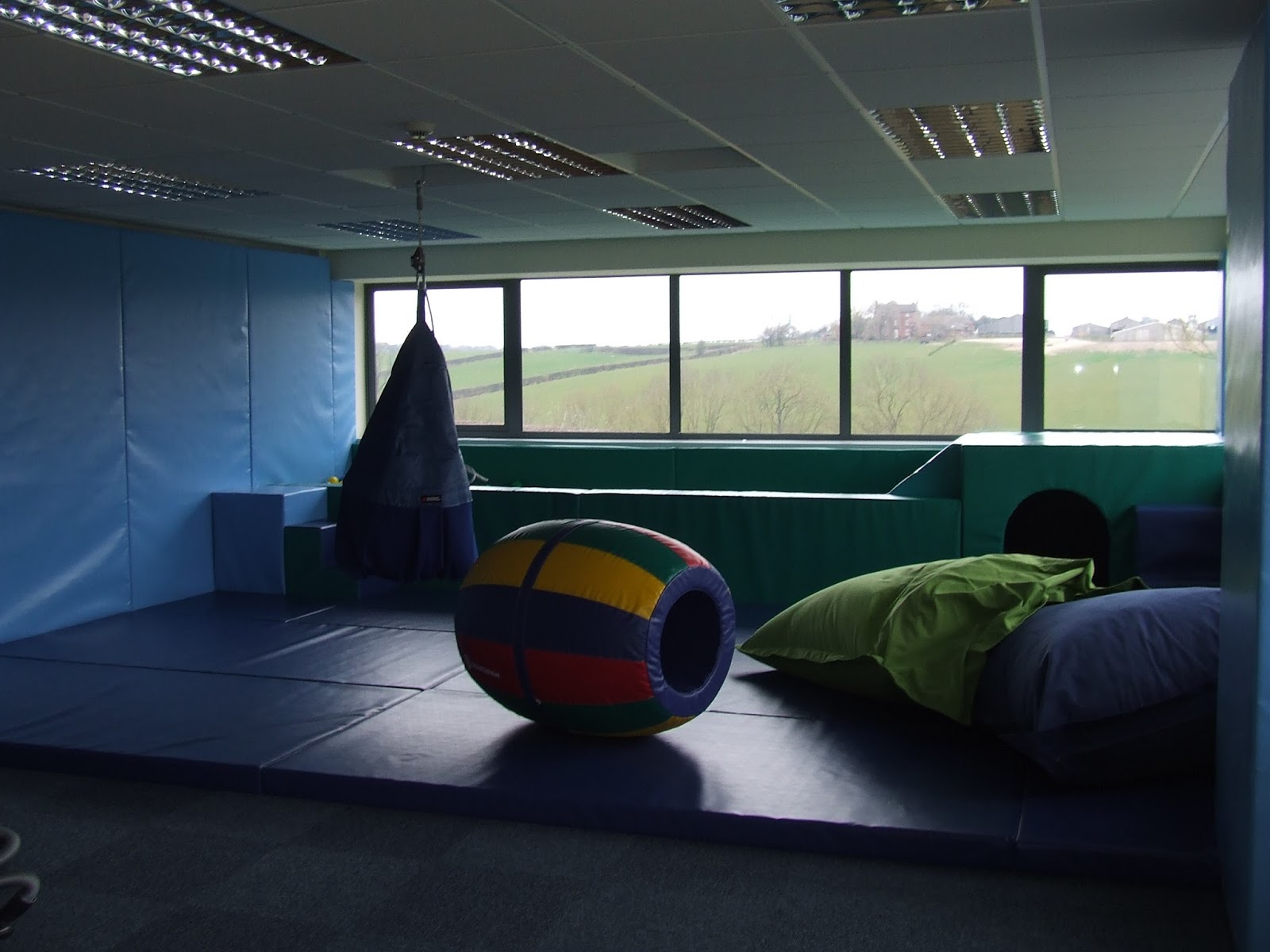
Children’s Choice Therapy Centre is a new unit providing assessment, treatment and training.  The centre includes training facilities, opportunity for group work, specialist Occupational Therapy, and a full Sensory Integration based Occupational Therapy treatment room (built in association with ‘Spacekraft’ – sensory equipment providers).  This gives us the opportunity for more complex assessments and interventions, and to train and work alongside carers and parents to help embed treatment principles in to daily life to impact the child’s / young person’s every day tasks.

All are very welcome to attend / drop in on our open events, to see this new facility, and to learn more about our services.

Friday April 8th: 3pm – 6pm
Saturday April 9th: 2pm – 4pm

11D Lancaster Park
Needwood

Staffs
DE13 9PD


Alison Hart,
Sarah Sheffield, Samantha Armitage, Jessica Quinn, Sandra Town,
Mel Homan, Kikidyn Matemba-Belli
07855234668


Friday, 18 March 2016

Makes me so sad........


One of the things we do at Small Talk, is to see children who are having behaviour issues at school or at home and people are seeking the answer as to why they behave as they do.

It's so sad how so many children are being misunderstood. Time and time again, we see this scenario: 

The child who doesn't understand social clues and cues, may not be good at reading facial expressions, doesn't understand abstract language such as sarcasm, or people's intentions. They probably don't always remember that they need to modify their language according to the listener i.e. you don't talk to the teacher like you would your mum. They develop a strong sense of right and wrong to help them cope. They may be aware of their difficulties and be anxious.

Then, at lunchtime, someone knocks into them, they refuse to say sorry as it was 'an accident', they may try to explain that or just run off laughing. The child knows that you must tell if someone does something wrong but is sent away by the dinner lady or teacher on duty as 'he didn't mean it'. This upsets the child who gets more frustrated and wants to get his point across. He ends up shouting at the member of staff and is then sent to the headteacher. He is really fed up, frustrated and down right angry, so shouts at the headteacher too....... result: excluded for the next 2 days!

These children may be on the autistic spectrum but they might not. Social understanding is hard for many children.

The solution is simple:

1. A Social thinking programme with behaviour mapping for the child (Garcia Winner)
2. Training for staff

Why is that so hard to understand?


Tuesday, 23 February 2016

Just ‘Scene and Heard’ of a fantastic new AAC app!


The more complex cases we receive each week at Small Talk speech and language therapy, the more there is an increasing need for efficient and universal communication aids. ‘Scene and Heard’ is a fantastic app by Therapy Box, that has been created as a seamless transition between both low and high tech AAC. The diversity in speech and language difficulties we target on a daily basis including; ASD, non-verbal clients, those with reduced communication breakdowns or limited language abilities means it is vital we are able to use resources that not only universal target the range of interventions we provide, but that also bridge the prominent gap between therapy and generalisation of learnt skills to everyday life.

‘Scene and Heard’ comprises of a library of over 12000 useful Widgit Symbols, which can be effectively added with photos into personalised, printable communication books for each client. The ability to tailor these resources into visual timetables gives everyone the opportunity to independently plan their own lives. An important factor during the speech and language therapy process is supporting the child or adult to take responsibility of their own learning and daily routines, the easy-to-use features means that this AAC devise can be readily adapted by child, parent, teacher and therapist.

‘Scene and Heard’ can be used to creatively develop step by step instructions for everyday activities, using both the in-app accessible scenes or the new added feature of being able to draw a scene ensures that the designing of these tools is a flexible, fun stage of the therapy process. Each in-app scene consists of a range of interactive media ‘hotspots’ that allow personalised audio recordings, video recordings, spoken text and symbols to be inserted into the activity to provide information through multiple modes of communication; further highlighting ‘Scene and Heard’ as a universal and accessible tool for anyone.

As well as those who struggle with receptive and expressive language, we regularly work with people who also have limited narrative skills. In addition to the augmentative and alternative communication functionality of this app, I have personally found the customised scenes a very useful resource to use when creating a sequence of events. The ability to upload new photos means I can create scenarios and social stories that can be accessed by the diverse population that I work with. Many people we work with at Small Talk have some addition behaviour needs, typically as a consequence of the speech and language difficulties; Scene and heard incorporates a countdown timer into the activity to support behaviour management, easier transitions between tasks and increasing individual independence.

The all-in-one functionality of ‘Scene and Heard’ creates an AAC device that can be both low and high tech, ensuring that intervention can be continuous and seamless as progress is made. The attention to detail in the apps settings to prevent double taps, allows even those with limited fine motor skills to take full control of their learning. Further highlighting how this app is truly a universal and functional communication aid and has recently become an everyday staple in my speech and language therapy toolbox.

Natasha Hallam
Speech and Language Therapist

 www.private-speech-therapy.co.uk