
Small Talk Speech and Language Therapy and Smart Talkers pre-school Communication groups celebrate children's speech, language and communication
Showing posts with label pathological demand avoidance. Show all posts
Showing posts with label pathological demand avoidance. Show all posts
Friday, 12 March 2021
‘A PDAer will not accept anything on face value, not even themself.’
Guest blog post
Listening to Harry Thompson on his Facebook live today asking for contributions to the essence of PDA has inspired me to offer my personal musings on what PDA is.
It’s definitely not pathological demand avoidance. No demands are avoided when the world is on its axis but the problem is that the world has a tendency to keep tipping off! If anything, PDA would be better explained as an extreme intolerance of uncertainty.
The only way for a PDAer to survive is in a state of complete freedom and autonomy. Every other state detracts from the PDAers life force, to varying degrees. The external world can feel like a prison with torture chambers. The internal standards can also demand ‘correctness’ or suffering if correctness is not achieved.
Life is lived as a participant observer because the evidence about how to be human comes from living life first hand. This can lead to ending up in situations where the ‘participant’ part of the experiment can lead to precarious and even life threatening situations. The boundary for what is good, true, safe, healthy, wise, educational, fulfilling, interesting, useful and all of the opposites can only be identified by stepping up close to or across the boundary. Other people’s views can be trusted and used as a guide, but the PDAer has to have evaluated that persons credibility first and agreed that they are someone who can be trusted and respected, they do this not by judging a persons acts or words, necessarily, but by knowing their heart. This process can be instinctive and immediate or can require evidence and develop over time. Sometimes the PDAer, especially during the most treacherous of developmental periods in the lives of many: childhood and adolescence, can give the impression to parents, teachers and professionals that they ‘just don’t care,’ or ‘make bad choices and cannot be trusted.’ Their need for experimentation can frighten those that don’t understand that the PDAer wants to survive, and this is their way of going about it. What actually threatens the PDAers life is attempts by people to limit their freedom to explore the world and find their own answers, which can, ironically lead to the PDAer contemplating suicide or setting themselves on a steady course of annihilation. That is not to say that the existential angst experienced by the PDAer in their search for truth and meaning doesn’t also threaten their life but aiming to catch the PDAer and trap them within a set of rules imposed by people who the PDAer sees as unqualified to lead will promote utter devastation, often expressed using the 5fs. There will be no lengths that the PDAer will not go to, to ensure their freedom. Don’t push the PDAer, support them in their journey and you will see that they love life. Listen to what they tell you. If they tell you that they want to do X or Y, then allow them to do it, if you can, because they will know best what is right for them and will cease to engage in the activity if they find that it wasn’t right for them after all, or that it isn’t right for them at the moment, for any number of reasons, even if they desperately want to do whatever it is.
In one respect it’s the extreme need for absolute rectitude and justice. Things need to be just, correct, evidence based and open to constant evaluation and revision to ensure that these standards are upheld. No-one has any more authority to deicide what is true and real than any other. That is not to say that there are no people who have, indeed, contributed a great deal to the exploration of human ‘being’ but there are an awful lot of people who merely reach a certain age or professional status and believe that they’ve therefore gained a superior insight into what it is to ‘be’ and how life should be lived. This can include teachers, parents and people within various professions and institutions. The PDAer cannot accept this fundamental injustice and will do everything to escape from the snare of liars and cheats. If you can tell the PDAer why they should be doing, thinking, saying something and they are in agreement with it, then you will not see any objection. However, if you explain why and they do not agree with you but you then aim to force them to follow your rules, ideas, plans etc… then you will see them react in any number of ways to protect their freedom. If there is too much injustice in a given situation then this can lead to non-verbal communication in the form of explosive and / or destructive meltdown. However, essentially, the PDAer is one of the most reasonable people you will ever meet if they are in their optimum state, because for them it’s all about reason and logic.
Also on the matter of things being correct, the PDAer and autistic, will not accept mistakes or misrepresentation. That is not to say that they don’t tolerate or expect anyone, including themselves, to make any mistakes, it’s more that the mistakes, once identified need to be corrected. For example, if the PDAer is described by someone in a way that definitely does not represent the what they believe or intend to say then this can cause the PDAer to seek to correct that person. Stereotyping, pidgeon-holing, assumptions based on race, age, gender, accent or whatever are something that the PDAer rejects. Generalisations and not welcome unless there is enough evidence to make a generalisation. Ideas need to be specific and precise and you will find the PDAer and autistic spending time seeking clarity on matters small and large, which can come across as pedantic or overly critical to those who do not understand the reasons behind the outward expression. They tolerate mistakes in themselves even less well. Lots has been written on this under the banner of ‘perfectionism’ and ‘rejection sensitive dysphoria’ (which, are two of the areas where ADHD and PDA overlap, in my opinion). The most extreme way of managing this can be excessive people pleasing or not taking any kind of risk, whatsoever, and living a very restricted life.
The PDAer may seem harsh or caustic at times but in reality they suffer deeply at the idea of the suffering of others, man or beast. They are essentially humanitarian, which is why hierarchy is abhorrent to them as it requires the subordination of one being to another, and that is a kind of enslavement. However, you will often find the PDAer at the service of others, often those who are in vulnerable positions, in order to protect and ensure their humanity.
The self. It is difficult for the PDAer to develop a sense of self. This is not to be confused with a sense of justice. While the PDAer can have a strong affinity with certain causes, which may appear to be ‘who they are,’ they often have an elusive sense of self. They self is part of the PDAers exploration. They will often not commit to a given identity because they are not sure yet, without having all the evidence, which their true self is. How can they decide and commit to who they are without having explored all that there is to explore about human existence, and that takes a lifetime, doesn’t it? So the self can feel elusive to the PDAer who will try out different selves at different times and will wear different masks when interacting with others, until they have a better idea of who they are and whether they are prepared to share that intimate and private journey with anyone else. This will often lead people to see the PDAer as a ‘social chameleon,’ or ‘not sure of themselves.’ For the PDAer this can cause them to feel uncomfortable with uniting the different ‘selves’ or ‘characters’ that they play out in public, so mixing different groups of friends is often an excruciating and nerve wracking prospect. As they develop the PDAer can learn to become more ‘authentic’ but this process can take some time and is unlikely to be wholly complete while there is still more to learn, which, for the PDAer will be when they take their last breath. Despite this often tentative grasp on self-identity the PDAer will not accept outsiders defining who they are based on preconceived ideas, such as diagnostic criteria, race, gender, class, age etc… as mentioned before. Worthy of note, and ironically, there is the potential for the PDAer to dissociate and be open to influence and drawn into situations in search of this development of the self. This area of exploration for the PDAer can be the most profound and the most dangerous, but once they have enough experience to have a firmer grasp on the ‘self’ they can be a great source of knowledge and wisdom, mainly because their (re)search will have been so thorough. It will have combined lived experience, book and multi-media learning and will generally not venture into areas where they are unable to have lived the experience. That is not to say that they do not have an opinion on almost everything, they often do, as they are typically very contemplative individuals, but they will usually not claim to be a commentator, nevermind an authority, on that which they do not have first hand experience.
Expectation and praise. This is so complex in the PDAer. It is rooted in perfectionism and RSD, on which there is lots written. The PDAer sees the need to meet the expectations of others and a direct threat to their freedom. They don’t want to commit to being the same way all the time or feeling s certain way in advance. If you say to the PDAer, ‘you are such an amazing friend,’ they will feel suffocated by the need to maintain that standard of behaviour. The question in the PDAers mind will be ‘so if I behave in a way that is crap and let you down, will I disappoint you and will you reject me?’ Sometimes it’s easier for the PDAer to keep people at a distance in order to manage the onslaught of demands to act a certain way or maintain friendship exchanges, even when they don’t feel like it. Often people see this as not being a good friend, when for the PDAer things like frequency of contact have no bearing on how they feel about a person. Often the PDAer will end up with very few people who are able to understand this about them, i.e. people who know their heart. This processing of expectation and praise can be applied to any relationship or setting and can be crippling to the PDAer.
The need for structure and routine but defiance of the very notion. Because the PDAer often has an elusive or changeable sense of self or direction, in their life search and journey, structure and routine can help them to feel grounded. Ironically though, they abhor boring, stuffy, conventional, ways of being because they offer very little in the way of personal growth. Not only that the PDAer is quirky and queer by nature. However, there is often a misconception about being quirky or queer. Often ‘followers’ are found wearing outrageous clothing or belonging to alternative groups. You may find the PDAer lurking among them but you may also find the PDAer in very mainstream settings or with no outward expression of their quirks, such as piercings or tattoos. The quirky and queerness is more of a proclivity or propensity. They need to fulfil the need to laugh and get excited, and this will almost certainly be expressed through something extreme or outrageous. They have an innate understanding (or at least a very early understanding) that nobody knows why we are here. The enormity of the universe and existence makes for an overwhelming desire to just ‘go crazy,’ lighten things up and have a laugh to get through it all.
Things which the PDAer will undoubtedly struggle with are romantic relationships, conventional employment, friendships, familial relationships, nonsensical and illogical rules or laws, sensory overload (as they are hyper-sensitive) and self (loving/loathing).
That’s all for now and that’s my personal view informed by lived experience. There’s so much more to say on independence, control, need for certainty, shame, drive, ambition, creativity, performance, attention and much, much more. I don’t even know if it has anything to do with PDA but I seem to be nodding my head a lot when other people who call themselves PDA are talking their truth. Many of these ideas and observations have been made by me for many years now, certainly long before I ever heard of PDA, others much more recently and have been influenced by the literature and discourse on PDA, ADHD and autism, but only in as much as it relates to what I have lived.
I realised I was ‘Aspergers’ in the 90s, but only because that was the closest definition of what I was (what was wrong with me, in the view of me and many others at the time) that was available. I have a diagnosis of ADHD and a diagnostic opinion of autism (basically, the DISCO without informant reports), which mentions PDA in the report, so I have decided to share my views on this basis alone. Also because my son is his own brand of neurodivergent too, but probably not essentially PDA
Nikola Duncan.

Friday, 15 May 2020
PDA Awareness Day 2020
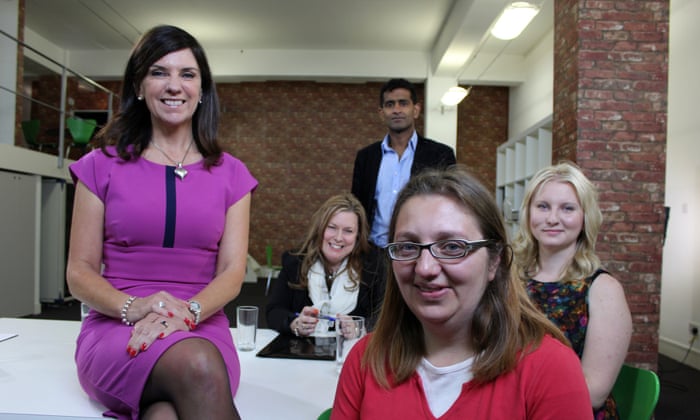
Can you believe that it’s five years since the first episode of Born Naughty was shown on Channel 4. Honey was the first person who I had come across who had PDA. I knew she was autistic but I knew it wasn’t typical autism. Thank goodness for an open-minded paediatrician who didn’t mind putting his neck on the line as well, to declare to the world that we felt she had PDA.
It’s quite embarrassing looking back on my lack of knowledge of the wider implications of PDA, for example, I am heard to describe it as 'a mild form of autism.' How wrong was I?
But I’m willing to admit that and I am not afraid to admit that I knew I needed to learn more. I have spent the last five years doing just that: talking to children and young people with PDA and listening to young people and adults with PDA plus listening to Parents of children and young people with PDA.
I know so much more now than I did then but I also know there is so much that we need to know. Research is moving forwards but we need much more. How apt that it is actually PDA awareness day today. If you have a look at the PDA Society website they have a whole lot of quick tips and information to share with others here is a roundup of their most popular
Help spread the word and increase undrsatnding because only with undersatnding can acceptance develop.

Thursday, 7 January 2016
Are you are a parent whose child has diagnosed or suspected PDA or Autism

Hi, my name is Mandi Baker and I am studying for an MSc
in Applied Research at Staffordshire University. I have worked previously with
a number of children on the autistic spectrum, speech and language difficulties
and with global complex needs. Last summer, I received my undergraduate
provisional results, and the very same day was accepted on to the masters
course, so like any other mum, that
evening I celebrated by pottering around tidying up after the kids were finally
asleep in bed. In the background the TV was on, and I remember hearing the
words “Born Naughty”, so I sat down in anticipation to watch – when Honey was
good, she was very good, but her rage-filled meltdowns were alarming to watch,
and instantly my heart went out to the parents.
Over the following weeks, I found myself asking the same
question over and over where is the support for parents and of course the
children?? Pathological Demand Avoidance Syndrome, a new sub type of autism,
one that clinicians and educators seem to know little about. I am not only fascinated by this condition
but also very passionate about the support or lack of support for parents,
particularly, whether their well-being improves after diagnosis?
For my
dissertation, I will be conducting research into, parent well-being in families
of children with suspected or diagnosed Autism or Pathological Demand Avoidance.
The aim of the project is to investigate the
associations between children with suspected and diagnosed Autism and PDA and
the parent’s well-being along with the impact it has on their families. The
emphasis on the diagnosis is important as the interventions in place for
children with suspected PDA, are unsuccessful, due to the characteristics of
the child. The strategies used for children with diagnosed PDA, conduct
disorders or autism have been tested and have been found to be unhelpful
because of the inflexibility of the demands used (O’Nions 2013).
So, if you are a parent whose child has diagnosed or suspected
PDA or Autism and can spare 10 minutes to complete the online study please click
the following link
I want to make this as informative a piece of research as
possible so please, if this description fits you (or anyone else you know), get
in touch!
Many thanks,
Mandi
Email: b004105b@student.staffs.ac.uk
Saturday, 16 May 2015
What is Pathological Demand Avoidance?

If you saw the Channel 4 documentary 'Born Naughty?' last thursday, it might have been the first time you had come across the term 'pathological demand avoidance' or PDA for short. It is still not recognised by many professionals but I'm sure it's only a matter of time before they do though!
Elizabeth Newson in the 1980s found that there was a group of children who had ASD but that they had distinct characteristics.
The
main features of PDA are:
·
obsessively resisting ordinary demands. If you view the child a being extremely anxious, the everyday request can be the straw that breaks the camel's back. It's about threshold and tolerance levels which can be very low. The more relaxed they are, the higher these can be. Absolute refusal is common but other techniques can include 'shocking' tactics or use of behaviour/language designed to put the reciprocating adult off their stride. I can't repeat on here, some of the things that have been said to me! The brighter the child, the more bizarre the behaviour they can counjer up! Many of the children I have worked with have had social workers who have had to come in pairs!
·
appearing sociable on the surface but lacking depth in their
understanding (often recognised by parents early on). This can be the smoke screen that causes others to dismiss ASD, as social communication is such a key part to an ASD profile. This level of sociability can lead to the child being able to be very manipulative.
·
excessive mood swings, often switching suddenly. This is usually observed in all situations and worse where they aren't as relaxed. However, Parents report that sometimes, children can change as soon as they get home. This is because they are stressed throughout the day, manage to hold it in and then explode where they are more relaxed. I think its like a bottle of pop, shaken all day then you take the top off!!!!. Parents are often the brunt of the behaviour. The signs of anxiety can be many things but can usually be spotted, they include obvious body tension in hands, shoulders etc but you can also spot other things including their voice becoming higher as the tension affects their larynx. if you can identify the signs, it is sometimes possible to diffuse before a problem occurs. I have been very lucky to date to have been able to do this during assessments, so in the case of one child, was the only professional to avoid attack!
·
comfortable (sometimes to an extreme extent) in role play and pretending. I have found that the pattern of play is different so that they like to control the play with others eg I observed a 6 year old playing 'mums and dads' which looked appropriate but was actually her fully controlling the situation. She wasn't able to listen to any suggestions from others. Honey from Born this way programme 1, played 'dressing up' with my colleagues Charlotte and Frances but she dressed them not the other way around.
·
language delay, seemingly as a result of passivity, but often with a
good degree of 'catch-up'. At first sight it can seem totally appropriate BUT closer analysis shows they are hiding it well. Coping with receptive or expressive language issues and masking them from others must take so much effort and is in itself anxiety provoking.
·
obsessive behaviour, often focused on people rather than things.
All behaviour is telling us something and as professionals we need to identify the cause. there's no point in just working out a behaviour management plan unless we are addressing the core issues. The behaviour is merely the symptom. Many of the traditional ASD strategies don't work or don't work consistently but should still be tried. If we see PDA behaviour as 'panic attacks' it helps us to cope and deal appropriately. If we can help them manage the anxiety, reduce the the things which cause anxiety and help with any receptive and expressive language issues, we can go a long way to help the child.
There is no magic wand cure for PDA and the demands on their family is unimagine-able. Parenting is hard enough in usual conditions, so I take my hat off to each and every one!

Thursday, 14 May 2015
Honey: Channel 4 'Born Naughty' Programme 1

You might have (briefly) seen me on the Chanel 4 programme 'Born Naughty?' I was involved with Honey, a 9 year old girl who was having lots of behaviour issues.
I saw her for the first time at the Children's Centre in a small Staffordshire Village, which is within the local library. I planned for her to get there at lunchtime, while it was closed, just in case we had any problems. I knew that she wasn't in school and could be difficult to manage.
Dr Ravi Jayaram, the Paediatrician and Dr Dawn Harper, GP, had already seen her at this point and had felt I was the relevant 'expert' for the job. My remit was to assess her language and communication skills and to see where that lead me including taking part in an ASD assessment .
It took a while to get Honey into the room (#understatementoftheyear), with her Mum being the brunt of her feelings. When she agreed, she said that cameras couldn't come in. I started the session with photographs of all the activities we were going to do and asked her to put them in the order she wanted to do them in. This gave her a sense of control.
I screened her language using an ipad app and various informal activities. I'd got a bubble wand as one of the activities both as a motivator and as a reward in the middle of the tasks. Unfortunately it was raining extremely hard but a promise is a promise so we went outside to do this.
I think she felt sorry for me then as we were both soaking wet through so she agreed for the cameras to come in. I carried on looking at her expressive language using a narrative exercise. She joined in the activities but was very anxious. This was exacerbated when I asked her to re-tell the story: a palpable wave of fear emanated from her. To diffuse down the situation, I stepped into help. She completed all the required tasks.
After the first session, I knew we had a child who was very anxious with difficulties with receptive and expressive language and social communication but not enough information by any means!
We decided to capitalise on her love of animals and go to Nature and Nurture Therapy Centre at Sunshine Barn, in Ashbourne, for the next session. This is run by Frances Weston a counsellor with experience of many types of childhood issue including ASD and anxiety. I also took along Charlotte Williams, an autism therapist so they could both help in my assessment of Honey's needs. I like to work with others when doing an ASD assessment, not just a clinical psychologist and paediatrician but others with potentially different viewpoints if possible, so all factors are covered/considered. A diagnosis of ASD is a label for a lifetime so the NICE guidelines are essential as a minimum.
WOW!! What a difference. She was greeted by Tilly the therapy dog and came in quite happily. She spent some time familiarising herself with the other animals: Bertie and Beatrice the sheep, the ducks, the chickens etc and was fully co-operative for the entire afternoon.
I was able to complete a formal language assessment and various other tasks for an ASD assessment. Then later, while I interviewed her mum, Honey played with Frances and Charlotte and of course Tilly. This was quite unusual as Honey doesn't normally let her mum out of her sight in new situations.
Honey's mum has a really good understanding of Honey's difficulties. She lives with them everyday after all, so we were able to get a really good profile of Honey's strengths and weaknesses.
It was a very productive full afternoon and it was fantastic to have both Frances' and Charlotte's expert observations. We were able to report back our findings to the paediatrician. The findings from both sessions confirmed that Honey was on the autistic continuum. Her profile however,was not typical, rather it fitted the criteria for Pathological demand avoidance PDA).
As you saw in the programme, if you watched it, the positives of having a diagnosis are tied up with people's understanding of her behaviour. If we view it as 'panic attacks' its easier to stay calm and cope. The Elizabeth Newson Centre was also able to offer some different parenting tips. However, a note of caution: a diagnosis doesn't take away the extreme difficulties of Honey and her family. The diagnosis is only the beginning. They still have to live with this and do their best to get through each day. I have the utmost respect for them and hope I'd do half as good a job in that situation!
We'll look more about PDA next time.
For more information about Sunshine Barn please go to http://www.natureandnurture-cic.org/
Subscribe to:
Posts (Atom)