Monday, 3 July 2017

Research: Autism and the sisterly bond


As the youngest of three siblings, with two older brothers I have been fascinated with how siblings interact. Playing with dolls and making up stories was my rest from running around the garden covered in mud with my brothers. During these hours I often wondered what it would be like to have a sister. Would we argue over toys and clothes, or would we share everything and get along perfectly? If our personalities were fundamentally different, would that make things easier or add another difficulty to the relationship?
This is what I have been investigating in my current research. Previous research has stated that sisters- when one has autism- have a more positive bond than a brother-sister or brother-brother pairs.  In my project ‘Understanding the experiences of sisters when one has Autism Spectrum Disorder’ I aim to hear the stories of sisters who have been effected by autism in one way or another, to gain an understanding of what may influence their relationship. Ultimately, I hope that this will add to the understanding of autism and sibling relationships and perhaps one day be used to improve the bond between siblings when one has autism.

Much of the current research focuses on the parent-child bond or the parent’s experiences. But the sibling relationship is often the longest relationship we will have in our lifetime, and it is so often overlooked in research and life in general. Furthermore, I would like to understand this research question from the perspective of the autistic sister to learn both sides of this fascinating bond.
I have already interviewed a number of neurotypical women who have an autistic sister. And I am now looking for autistic females who have a sister! Participants must be female, over the age of 16, have a diagnosis of ASD and have at least one sister.  If you, or anyone you know, are eligible and interested in being a part of this novel research, please get in touch with me at fhd1g14@soton.ac.uk
Participation will include one interview which will last no more than an hour- this can be done over the phone, skype or in person. Interviews will be recorded, transcribed and anonymised. Although some quotes may be used in the write up of the report, there will be no way of linking them back to you.  

I am hoping to have this research published in an academic journal and I would greatly appreciate any help in achieving this. Whether it is taking part or passing this on to anyone who may be interested.

Thanks for reading!

Ffion Davies

University of Southampton


Friday, 16 June 2017

Would you like your child to be ready for school and attend a quality holiday activity?


We have some summer group sessions running at our clinic base on the Staffordshire/Derbyshire border to help children be ready to start school. The sessions will look at:
  • Confidence to communicate
  • Attention
  • Listening
  • Memory
  • Vocabulary
  • Verbal reasoning

via games, activities and stories. We'll have fun while we learn! These sessions will be run by a fully qualified and experienced speech and language therapist.

Monday 14th August  to Thursday 17th August 9.30-11.30am

Cost: £200 per child. Spaces are limited so please apply early.

To book https://v1.bookwhen.com/smalltalk

Thursday, 15 June 2017

Exciting new development: summer school for teenagers with social communication difficuties

We are delighted to announce that we will be running some intensive group sessions for young people with social communication difficulties at our lovely, peaceful clinic at Bartonfields.  We we also have evening classes available from september.

As teenagers move into their secondary school and young adult years, they experience increasingly complex social situations and academic curricula that require more nuanced social understanding, fine-tuned critical thinking, a higher level of executive functioning, etc. 

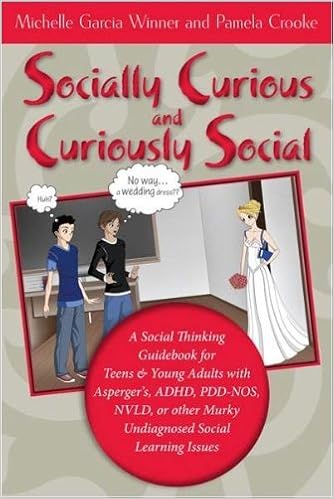
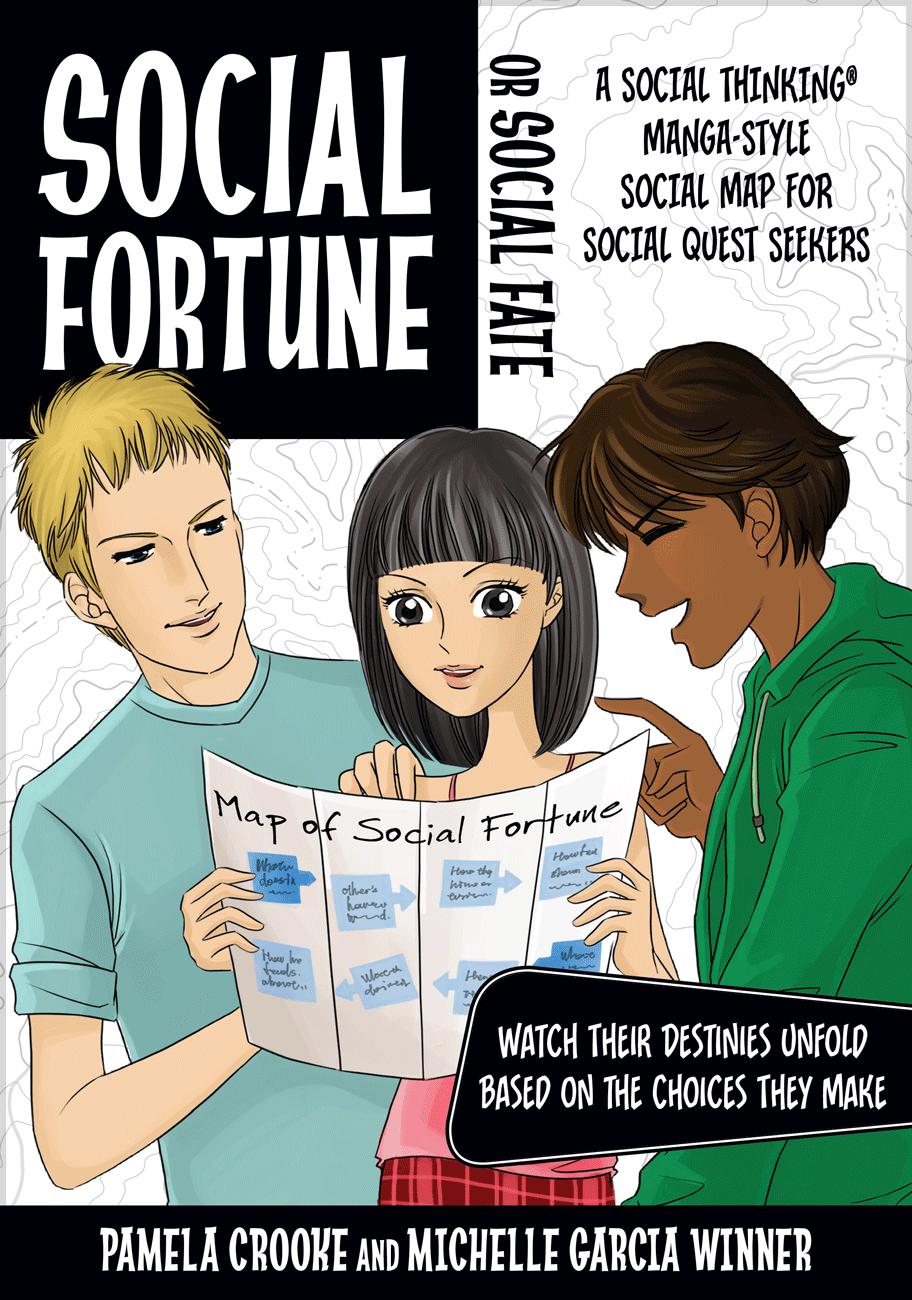
We use the work of Michelle Garcia Winner, the founder of Social Thinking, to provide valuable teaching tips and delve into the scope and sequence of using Social Thinking’s products with students ages 11-22 to improve self-regulation and social competencies.  The materials are helpful for students with social learning challenges (ranging from ASD levels 1 and 2, Asperger’s Syndrome, ADHD, etc.) or students who are un-diagnosed yet struggle with the rapidly increasing demands of social interpretation and related social skills. Some of the materials that will be using include Socially Curious and Curiously SocialSocial Fortune or Social Fate, and Social Thinking and Me, and more. 

Monday 7th to Friday 11th August 2017 
Ages 11-14 9.15 am-12.15 pm 
Ages 15-22  1.15- 4.15 pm

Cost: £350 per young person. Limited spaces available. To book https://v1.bookwhen.com/smalltalk

Image result for curiously social socially curious  Image result for social fate social fortune

Are you worried about your child's speech sounds, would an intensive course be just what they need?


We have some summer intensive group sessions running at our clinic base on the Staffordshire/Derbyshire border to help children with speech sound difficulties. The sessions will look at:

  • phonological awareness
  • auditory discrimination
  • making a difference
  • consolidating progress

via fun games, activities and stories. These sessions will be run by a fully qualified and experienced speech and language therapist.

Monday 14th August x to Thursday 17th August 1.00-3.00pm

Cost: £200 per child. Spaces are limited so please apply early.

Please email: office@smalltalk-ltd.co.uk  To book https://v1.bookwhen.com/smalltalk

Thursday, 18 May 2017

ASPERGER’S SYNDROME IN 13-16 YEAR OLDS – a review


Image result for ASPERGER’S SYNDROME IN 13-16 YEAR OLDS – review 


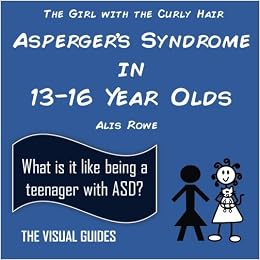
This easy to read informative book is written by Alis Rowe, the founder of The Girl With The Curly Hair.

There are many different books available on autism spectrum conditions, but not so many which are written by those who have an Autism Spectrum Condition themselves, so that makes this book all the more helpful. Unless you experience first-hand you can never fully understand, so the best resources and research you can find are those that are written and offered by those the condition themselves. Alis gives a real insight into Asperger’s syndrome and some of the hurdles teenagers with the condition may face.

With this book focusing on the early teen years, age 13-6 years, it gives a more direct look into Aspergers and what that can mean for this age group. Not only does this book offer information, reassurance and comfort to those with Asperger’s themselves, I also think this book could be a great help in allowing parents, siblings and family/ friends of the person with Asperger’s to grasp a better understanding.

Asperger’s Syndrome In 13-16 Year Olds, is written in such a straight forward way, it’s a very easy read but it still manages to focus on so much valuable information. It really gives you a clear idea of what living with Asperger’s can be like and it encourages you to learn about the similarities and differences between people who are neurotypical and those who have an ASC. Alis Rowe has given some useful advice and reminders, which will be really helpful to many. Alis has also encouraged the readers to see that difference is not wrong; it is something that a person should be aware of and there can be many positives with being different. She has included a very simple but effective illustration of an example of thinking in an alternative way, which shows that difference is something that can be embraced. This illustration also includes the caption “She sees the world differently”.

It’s almost as if this book has been stripped of unnecessary detail, which allows it to focus on key points and key messages, which is extremely beneficial. Alis talks about many aspects of having AS, including: sensory challenges, friendships, feeling lonely amongst others, the stresses of the school environment, the difficulties of the journey of adolescents, special interests and why those with AS might have some, or all, of these differences and challenges. I think this book is a must have for all teenagers with Asperger’s syndrome who are feeling confused and alone in being different.


Natasha Dale


Wednesday, 3 May 2017

Doing what it takes........ a holistic approach

I am a speech and language therapist who sees children with ASD and/or complex communication difficulties including selective mutism. If I was in the NHS I would be called highly specialist. I see children who have many challenges, some of which are speech, language and communication but many also have extreme anxiety. It's a chicken and egg situation because if they didn't have Speech, Language and Communication Needs, they wouldn't be so anxious, if anxious at all, while the anxiety blocks their abilities both to understand and to express themselves. Therefore, to do my job properly, I have to know about anxiety and be able to address some of the issues alongside. Consequently,  have studied and  I use animal assisted therapy (AAT), CBT and NLP as part of my approach with traditional approaches including Social Thinking by Garcia Winner.

I discussed this recently at a RCSLT clinical excellence network. The responses were very interesting: completely polarised. Almost half the audience wanted to know more, took the references and 'where to go from here' information readily, the other half raised their eyebrows and shook their heads. There is a wealth of clinical evidence about all the approaches for counselling but they were disturbed because there isn't in speech and language therapy.

I use the animal assisted therapy by having Ralph (a certified PAT dog) in on sessions where I need the child/teenager to be relaxed so I can get on with the 'other stuff'. It works like a dream as he sits by them while they answer my questions or complete assessments. They can stroke him or ruffle his neck as they think or cry into his neck if they feel like it....he doesn't mind a bit.

The CBT is really just looking at the problem and breaking it down into baby steps, which is actually what most speech therapy is, while the NLP helps to shift negative mind sets.

The Social Thinking is a brilliant way of introducing the idea that social cognition is a vital area for us to get along with our fellow man even if we never wish to have a conversation with him.

I believe that we need to be more creative: there is no one-size fits all approach to these children and young adults. They've usually tried everything else by the time they come to me.

I know this blog-post will receive a polarised response too but I make no apology because my goal is to make a difference and not be just another professional who says they can't help because they don't fit traditional methods. As the saying goes: if we always do what we've always done, we'll always get the same results. We're lucky because we are not bound by commissioners or bureaucracy which imposes limits on what we do.

As a team, we have a wealth of clinical based evidence and that's sufficient for me: we achieve good, if not great, results!


Thursday, 27 April 2017

Why I love baby signing!

Guest post by Hannah Lindahl – Little Signers Club Leader for North Nottingham


As a ‘Baby Signing’ teacher I see, and am truly honoured to be a part of, countless occasions when the little people realise that they can communicate with the big people. The smiles on those tiny faces as the grown ups exclaim praise and joy as the little one shows that he is enjoying the ‘BUBBLES’ or that she would like to sing the song one ‘MORE’ time.

We all know that being a parent is a wonderful job but we also all know that at times it can be really hard work! Unfortunately, after approximately 9 months of baking, these tiny little beings are thrust into our lives with no instruction manual and no ‘standard issue’ crystal ball.

So when the tears start it’s a case of trial and error – a guessing game until a suitable solution (milk, a clean nappy or maybe just a cuddle) can be found.
Having embarked upon the ‘signing journey’ with my own children, I know just how invaluable having a method of communication with your child can be at times like this.  Seemingly endless tears from a frustrated, red faced, angry baby can be simply replaced with a gesture, indicating easily and succinctly that ‘MILK’ is required.

Which in itself is fabulous, amazing, and less stressful for everybody involved - but what if it was more than just signing? …….

One morning, when my smallest bean was approximately 9 months old, we took her older sister to nursery. At this time, the sign of the moment was most definitely ‘DOG’ , frantically signed at every passing husky, every mutt in a book and even in response to the dog barking next door! So safe to say that small bean was delighted  to see that there was a dog outside the nursery building, secured to the fence waiting patiently for it’s owner to return. Cue a happy child and a lot of excited signing for ‘DOG’!

And then our day continued pretty much the same as any other day. With big sister at nursery we were able to enjoy some ‘mummy and baby’ time and we passed the next few hours quite happily.

And then it was time to pick up big sister. We got ready, I explained where we were going and we got into the car. And as we drove towards the nursery I noticed something absolutely extraordinary – she was signing ‘DOG’!  We were not even there yet but she remembered?! She’s ONLY 9 months old – surely babies are not that clever? Oh, but they are! 6 hours after the original event, this tiny little person was showing me that she remembered what we had seen and she was excited about the prospect of a repeat encounter!

And it didn’t stop there – on arrival there was sadly no dog to be seen, which instead of upsetting her just resulted in a confused face and some signing ‘WHERE’?

And this was it – this was my BOOM, light bulb, WOW moment.  I already knew signing was fantastic at allowing my child to tell me if she would rather have a cup of ‘WATER’ or a drink of  ‘MILK’ , but at that moment I realised that it was so much more - She was now able to actually show me what she was thinking!

And that’s the incredible thing – even at this young, delicate age, when people assume they just sit and play and cry and sleep, babies are so capable and clever and able. The synapses in their brain are developing at breakneck speed and giving them the ability to think and question and process what they are seeing and learning. And all of the learning and new experiences just work to encourage more synapse development and new connections.

It’s like a vicious circle – but not vicious at all! – in fact quite the exact opposite! – A wonderful circle of development and encouragement and learning and bonding. And by signing they allow you a sneak peak into this world, like peering through a little skylight into their minds and seeing what wonderful ideas and thoughts are zooming around in there!


Signing with little people – why wouldn’t you do it? 

Hannah