Saturday, 30 April 2011

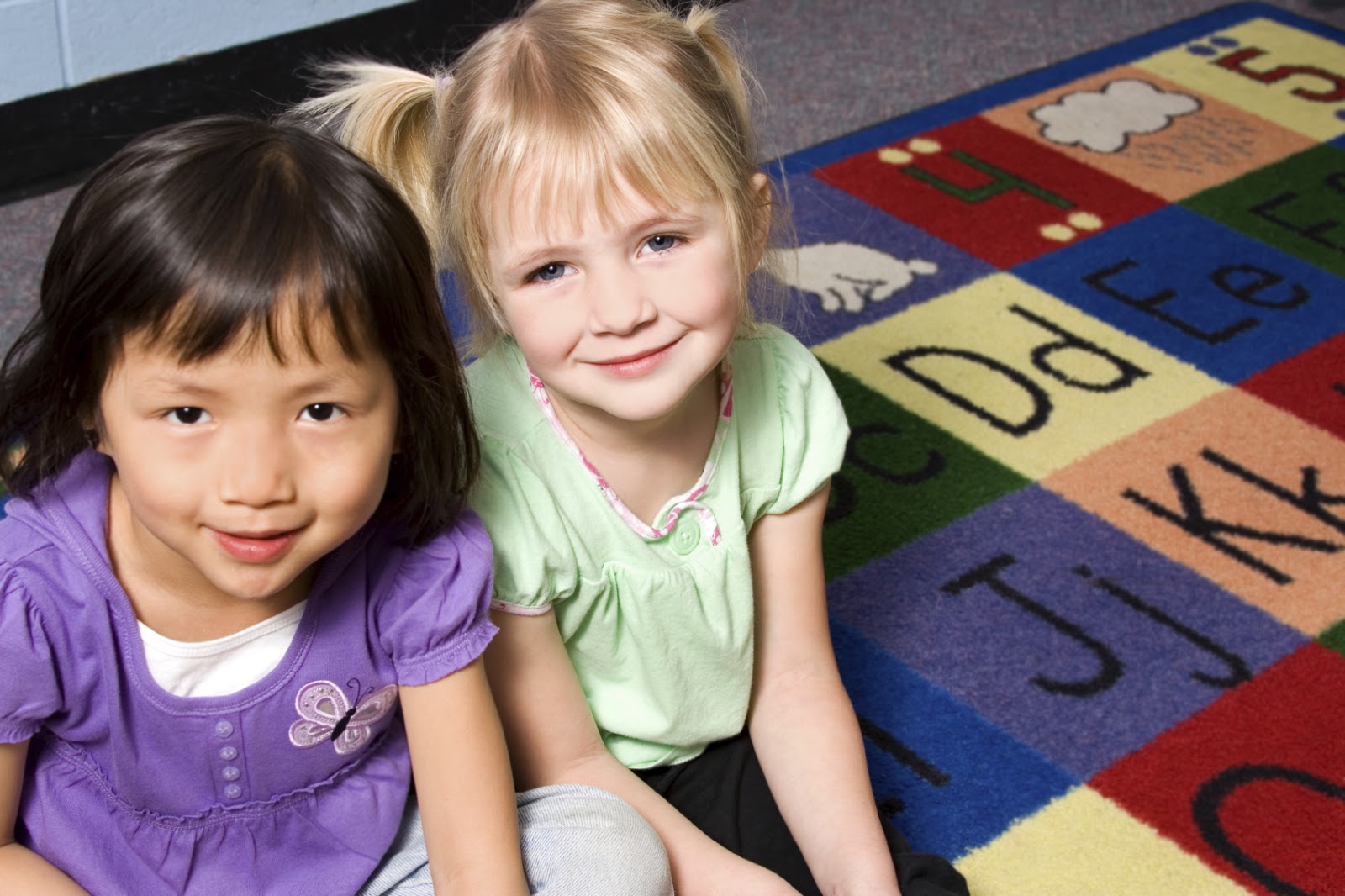
Is your child's environment communication friendly?

The Hello campaign aims to increase our awareness and understanding of communication and how to best develop it. A child's environment can be crucial. See www.hello.org.uk for further information. The following is their guidance on what to consider to optimise the environment.


Elements to consider:
  • Space, light and layout
Is there good light, with a comfortable temperature and not too many visual distractions
  • Noise levels
Are noise levels conducive to learning – what can be done to minimise necessary noise?
  • Use of visual support, this may include
  1. A colour coded map of school or setting , colour-coded directions, photographs of staff members,photographs/ symbols used to support routines, e.g. washing hands, getting ready for PE
  2. Visual timetables used for daily / weekly activities
  3. Objects, pictures and symbols used to teach vocabulary, to make stories more active and support engagement in other lessons
  4. Displays are used throughout school or setting to support learning
  • Adults who can prioritise communication, this may include adults who
  1. Have knowledge of language development.
  2. Understand the language levels of the children and the language demands in the environment.
  3. Can adapt their language so it is not a barrier to learning or communication.
  4. Give children strategies to say when they don’t understand
  • Routines
  1. Are children aware of rules and expectations?
  2.  Do they know daily routines; could these be supported visually?
  3. Are children given opportunities within lessons to say when they don’t understand?
  4. Are they explicitly taught how to listen, how to work together in groups? 
  5. Are there opportunities for children to interact and use language in different situations, with different people at an appropriate level?
Small Talk Speech & Language Therapy are able to offer audits of the environment, for more information please contact info@smalltalk-ltd.co.uk www.private-speech-therapy.co.uk


Tuesday, 26 April 2011

Calling all Child Minders! Please take our survey

Small Talk Speech & Language Therapy run a variety of training courses. We are looking to survey Staffordshire Child Minders to see what their views and needs might be:

Click here to take survey

We are happy to travel to do training too. For more information www.private-speech-therapy.co.uk


Saturday, 23 April 2011

Is my child being rude? .... may be not!


Picture the scene.... your 10 year old points to a rather large lady in the supermarket and says, 'She's got an enormous bottom!' You're shocked and highly embarrassed that your child could be so rude. But it may not be rudeness, it might be that he doesn't know how to use language appropriately in social situations and was just being honest. Many of the children I work with have such problems and I have to quite thick skinned on occasion!

A child may be able to use long complicated sentences with excellent vocabulary, no speech sound difficulties but still have a communication problem - it may be that has not mastered the rules for social language, also called pragmatic use of language or pragmatics 

Pragmatics involve three major communication skills:

  • Using language for different purposes, such as
    • greeting (e.g. hello, goodbye)
    • informing (e.g. I'm going home)
    • demanding (e.g. Take me home)
    • promising (e.g. I'm going to take you home)
    • requesting (e.g. I would like to go home, please)
  • Modifying language according to the needs of a listener or situation, such as
    • giving background information to an unfamiliar listener
    • speaking differently in a classroom than on a playground
  • Following rules for conversations and storytelling, such as
    • taking turns in conversation
    • introducing topics of conversation 
    • staying on topic
    • starting conversations appropriately
    • finishing conversations e.g. not walking away mid-sentence
    • how to use and read verbal and nonverbal signals
    • how close to stand to someone when speaking
    • how to use facial expressions and eye contact
These rules vary across cultures and within cultures. It is important to understand the rules of your communication partner. In a previous job, I employed Eastern European staff and was un-prepared for the differences especially in inter-personal space.

An individual with pragmatic problems may:

  • say inappropriate or unrelated things during conversations
  • tell stories in a disorganised way
  • have 'boring language' with little variety in language use
Younger children will have difficulties with this, we all have examples of our 3 year olds where they've have hugely embarrassed us by telling a complete stranger on the phone that 'Mummy's having  a poo!'  or such-like. However, if problems in social language use occur often and seem inappropriate considering the child's age, a pragmatic disorder may exist. 


Children with autism will have difficulty with social use of language but it does not mean that someone with social language problems necessarily has ASD. Pragmatic disorders will often appear alongside other language problems such as word-finding difficulties. These problems can lead to isolation and avoidance by others. 
Speech and language therapists can assess to see if there is a problem, decide the extent of the difficulty, look at any additional factors and draw up an action plan to help. 


I really like the work of British Therapist Alex Kelly, who has some excellent resources http://www.alexkelly.biz/ see links below.


If you are concerned about your child's social communication or any other aspect of their speech, language or communication www.private-speech-therapy.co.uk or check the yellow pages for the nearest NHS clinic.


Enhanced by Zemanta

Wednesday, 20 April 2011

Why we hate forwards facing push-chairs

This has long been a bone of contention among speech and language therapists and the basis of many a discussion between Franky and me. Here is an extract from the New York Times which sums up our concerns very well:
INSERT DESCRIPTIONNicole Bengiveno/The New York TimesShould baby face forward or back?
What direction does your child’s stroller face? New research raises questions about stroller design and the role it may play in a child’s language development.
M. Suzanne Zeedyk, a senior lecturer in developmental psychology at the University of Dundee in Scotland, studied the way 2,700 families interact with their infants and toddlers while pushing them in strollers. She found that caregivers were less likely to speak to infants when the child was facing forward, compared with strollers where the baby faces the caregiver — what she calls a toward-facing journey. In a small controlled experiment, the researchers gave 20 mothers and infants ages 9 to 24 months a chance to use both types of strollers, and recorded their conversations. She wrote about her findings in a recent Op-Ed article in The Times.
Mothers talked to their children twice as much during the 15-minute toward-facing journey, and they also laughed more. The babies laughed more, too.
Of course, infants do not spend all their time in strollers, but anecdotal evidence suggests that babies can easily spend a couple of hours a day in them. And research tells us that children’s vocabulary development is governed almost entirely by the daily conversations parents have with them. When a stroller pusher can’t easily see the things that attract a baby’s attention, valuable opportunities for interaction can be missed.
Ms. Zeedyk notes that forward-facing strollers are a relatively new development. In the 19th century, strollers were designed so that infants faced the person pushing them. But the development of convenient collapsible strollers changed that, because engineering constraints required the baby to face forward to look at the world, rather than a parent or caregiver.
Ms. Zeedyk notes that her findings raise more questions than answers, but she hopes stroller manufacturers will work to develop a collapsible stroller that faces both ways.
Meanwhile, the findings already encourage us to think again about how babies experience stroller rides — and other forms of transportation like car seats, shopping carts and slings. Parents needn’t feel worried, but instead curious about the elements of the environment that attract their children’s interest. The core message of our findings is simple: Talk to your baby whenever you get the chance — and whichever direction your stroller faces.
To read the full report, go to “One Ride Forward, Two Steps Back.”.
This forms part of one of the sessions of the Baby Talker sessions we run from Smart Talkers www.smarttalkers.org.uk


Saturday, 16 April 2011

Talking Twins You Tube video

We all saw this but what did you think? Just cute or did it provoke discussion about whether twins have their own language?  


Some say the video captures the twin boys on the verge of language development, but that it’s more mimicry and  babble than real 'conversation'. Others believe that it an example of the unique language that twins are thought to develop. 
The video, posted on YouTube in February, comes from the blog TwinMamaRama.com, written by the boys’ mother, who doesn’t give her name, but does say that she is a twin herself. In the video, the boys, wearing only nappies and socks, strike up an animated and intense conversation. The video has attracted more than six million viewers and been featured on television morning shows.  I love the fact that it went viral!

It's a good example of developing language as they're using sounds, vowels, consonants and syllables to mimic words. The intonation pattern is interesting too so it sounds as if they are asking questions of each other as well as making statements.

Most toddlers go through the same phase of language development. What is different about twins is that they have someone to practise this stage with so it appears like a language of their own. Without a twin, the same stage is one sided, as the baby has only older siblings or parents and carers to practise with.

My younger sisters are twins and that's what initially sparked my interest in speech therapy, as it appeared that they had their own language. They had their own words for things e.g the knitted elephants they took to bed every night, were called 'Deece' (they still have them albeit very tatty, and call them that even at 42!). The slightly older one (by half an hour but it counts if you are that one!) interpreted for the younger one who didn't really need to talk to anyone else until much later.

However, it is just a myth. There is no such thing as twin language, you just have a partner to copy and to practise with.


Enhanced by Zemanta

Tuesday, 12 April 2011

Keep your speech therapy/pathology CPD up to date: Sign up today to receive the second edition of S & L World: the global bulletin for Speech Therapy/Pathology

We have just finished the April issue of the quarterly on-line magazine and it is jam packed with interesting news, articles, reports and information. We could call it the 'technology issue' as several of the entries are to do with ipads, social media and use of the internet. Never has speech and language therapy been so involved with the world of technology or had to keep up with its advances as today.

Rebecca Bright gives an overview of available apps while Barbara Fernandez looks at using apps for articulation therapy. Regarding social media, we have an article by Deb Taylor Tomarakos about the use of Facebook by SLT/SLP, an interesting piece about using Twitter as essential to CPD: the key to continued professional success by Tanya Coyle and Shareka Bentham and I have written a short insert about blogging.

Moving away from the techno advancements are contributions by Vladan Plecevic and Igor Buzganovic   about verbal memory deficiencies of children with speech - language disorders, coping with difficult patients or co-workers by Stephanie Staples,  a telepractic model By Kimberly Murphy and Cued Articulation by Adrienne Bamberger.
We also have an interview with Helen Barrett, currently working in Uganda and a thought provoking quote from Chad Turingan  in a new section called  ‘Have your say....’

We’ve also got book reviews this month including Caroline Bowen’s latest and Frances 
Evesham’s new kindle book.

To read the April edition you have to subscribe http://www.slworldbulletin.com/order.php 


You can still read issue 1 free from the website.


We welcome contributions for the July edition, guidelines are available to registered users on the website. Closing date is June 15th. All advertising and reviews must be in by then. News items will be accepted until July 1st.

I hope you enjoy reading about our exciting and fascinating international world of speech &  language! I’d appreciate any feedback you may have.


Enhanced by Zemanta

Saturday, 9 April 2011

'What do I do to help my child learn language in a bi-lingual family'?: Advice For Parents/Carers Of Bilingual Children


Guest post by Sunita Shah, RCSLT Advisor on bilingualism and Chair of the London SIG for Bilingualism


·        It is important that you continue to use all languages introduced to the child. 
·        Do not be concerned about mixing different languages in one sentence.  This is natural for a bilingual speaker.
·        Be consistent in your choice of words to name objects in a particular sentence.  If you are using a word in one sentence do not refer to that word in the additional language in the same sentence.
·        The focus should be helping the child feel successful in giving and receiving a message.  Continue speaking your chosen language/s to your child even if he or she speaks back to you in a different language. If the child responds the message has been understood.
·        Use short phrases with lots of gesture and facial expression, as well as expression in your voice. This will help the child understand the meaning behind the words.
·        Encourage your child’s attempts to communicate in either language, giving lots of praise.
·        Use nursery rhymes and stories from any culture/language.
·        Advice from Speech and Language Therapy programmes can be given in any language.  Discuss this with your Speech & Language Therapist.

You may be concerned that if your child has not heard much English, he/she will be at a disadvantage when starting school. However, as long as your child has a strong foundation in their home language, then there should be no difficulty learning English.

The Speech and Language Therapy profession recognises that Bilingualism in a child is an advantage to learning.


www.londonsigbilingualism.co.uk

Related articles
Enhanced by Zemanta