Thursday, 7 April 2011

Listen Up - it's not just about talking


It isn't easy to see and recognise what happens beneath the surface of children's communication. Being able to listen, pay attention, play and understand are the fundamental building blocks of communication. 
Adults play a crucial role in supporting these skills. If a child can't listen and understand, they'll struggle to talk. That's why in April our theme is 'it's not just about talking'.
We've developed 2 brand new FREE resources to encourage listening, understanding, interaction and play.
For pre-school children, Listen Up (0-5), includes a card game with fun activities and advice on how parents and early year's workers can use the resource.
Remember fortune tellers from the school playground? The folded up square pieces of paper that you control with your fingers and thumbs? Well you will when you see it!  For school aged children Listen Up (5-11)includes a fun fortune teller with the card game.  These short and simple activities can be done easily and quickly and with everyday things.
To order your free copy email hello@thecommunicationtrust.org.uk. Write 'Listen Up' in the subject header and include your name, full postal address and the age of your child or children you work with. We'll send you the resource sometime in April.
Small Talk Speech & Language Therapy and Smart Talkers Pre-School Communication Groups are supporting the Hello campaign www.private-speech-therapy.co.uk and www.smarttalkers.org.uk

Wednesday, 6 April 2011

Increasing motivation:putting the fun into therapy!


Guest post by Tina Babajanians, from Los Angeles 


I recently started working in the school setting with elementary students and although it has been a lot of fun, there has not been a whole lot of therapy happening. The majority of my minimal 30 minutes is spent convincing my students as to why they should participate in therapy. As I searched for different ways to motivate my students and tried different techniques and approaches nothing was working. Therapy was still not as effective as it could be. What was it that I was doing differently in graduate school that I was not doing in my professional, everyday experience that was hindering me from motivating my students?
It was during the holiday season that I was out shopping for friends and family when I stumbled upon the toys/game section and it suddenly occurred to me! I was missing the “game turn”! Even though I had been using the games that were available via the school district, those games were not on the same level as these new games were! These games were colorful, interactive and fun! These were the games that children see on television and beg their parents to buy for them! So I bought about ten games, all on sale by the way, and I went back into therapy with my new tools!
I can honestly say therapy has completely changed! The kids come into therapy and there is no need to “prep” them for what is about to happen. They sit and they know, when they see the game, that if they take their speech turn they will get the game turn!
Now I have to say, that I was using games before but it was the look and nature of these new games that really motivates the kids. They come in saying, “Oh, I saw that on T.V.” as opposed to the games that I was previously using, which were not as exciting. It is as simple as the “old Candyland board” vs. the “new Candyland board”. And  I can happily report that my therapy sessions are now effective and time efficient!
Tina Babajanians
--
www.losangelesvoicetherapy.com | Voice Therapy & Accent Modification
All Services Available via Skype Upon Request

Monday, 4 April 2011

Become a Smart Talkers Pre-School Communication Group franchisee


We are looking for individuals with enthusiasm, drive and energy to become Smart Talkers  Pre-school groups franchisees


Do you want to:
  • Run your own business?
  • Have the privilege of working with pre-school children & their parents?
  • Work hours to suit you, to achieve a work/life balance?
  • Achieve a good income from a low investment?
  • Be part of a unique pre-school business?
What we offer Smart Talkers franchisees:
  • Full training, which is unique to Smart Talkers
  • Business support & advice
  • Back up and continual monitoring from a speech & language therapy team
  • Your own web-page on the national web site www.Smarttalkers.org.uk which you can update as often as you like
  • The opportunity to be part of an exciting team
  • A comprehensive franchise agreement
  • An designated individual area
We offer a fantastic range of groups and sessions for franchisees to deliver in nurseries, pre-schools and community settings.

No qualifications or  previous experience necessary.
To listen to our podcast and watch a video click here: 
http://www.smarttalkers.org.uk/business_opportunity.php  


Enhanced by Zemanta

Saturday, 2 April 2011

Teeny Talk: developing language skills for 2 year olds


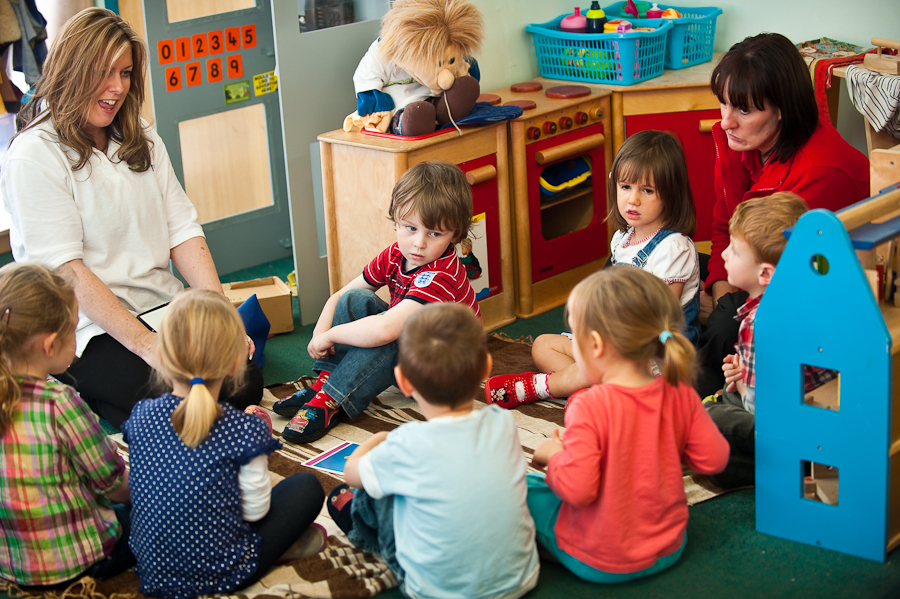
We have been running Teeny Talker sessions at Featherstone and Landywood Children's Centres since January. These sessions are for two year olds. The toddlers have been having fun with games, rhymes, songs, bubbles, stories and snack-time but have actually been working on their attention, listening, turn-taking, verbal understanding and vocabulary as well as expressive language skills. These are all essential components for developing language and communication. 

Many two year olds are not talking as expected and there are many different reasons for this (see last post) e.g. they don't need to because they have everything they want, maybe someone talks for them, perhaps they don't see the need to talk, there could be a general delay or a specific difficulty which will require referral to the NHS Speech and language therapist and further investigation. The groups have been a good way of showing the parents ideas and techniques to help.

Running groups for children this young has real benefits and is great fun.... for me as well as them!


For further information 0844 704 5888 www.private-speech-therapy.co.uk or www.smarttalkers.org.uk


Wednesday, 30 March 2011

My child isn't talking, why is this?


Reasons Behind Speech Delays
Written by the Admin team at YGOY
Most parents eagerly wait for their children’s first words. Hence, it can be worrisome and disappointing if they are slow and don’t utter those precious words. There are several reasons behind speech delays. However, the good news is that many children who seem to talk “late” catch up on their speech without any problems by the time they turn two years old. About one in four children is usually a late talker. Also, most of them don’t need any special help to get them back on the right track. Read on to know about the reasons behind speech delays.
Reasons Behind Speech Delays
Temperament and heredity can hinder in speech delivery, as can a eager parent’s anticipation of their child’s every single need rather than letting them speak for themselves. Here are a few reasons for speech delays in children:
  • Boys – They mostly develop speech later than girls, even though there is generally 1-2 month lag. By 16 months, boys use only 30 words on an average whereas girls use around 50 words.
  • Premature babies – Babies who are born early usually take longer to reach speech development milestones than others. However, by the time they turn two years-old, they catch up with other children’s speech development. According to pediatricians, parents should start counting from the child’s due date rather than his or her birth date, when they are analysing a preemie’sdevelopment. A premature baby born 3 months early than his or her due date might seem like a late talker but in reality it might be progressing fine.
  • Multiples – According to speech-language pathologists, it is estimated that nearly 50% of all multiples have some form of speech delays. Medical intervention during delivery, low birth weight and prematurity can occur more frequently among multiples. This can lead to speech and language delays.
  • Kids with chronic ear infections – If a child has fluid in the ear for months – more importantly in the first year when he or she is beginning to process language – it can lead to poor hearing. Thus, this may lead to delayed speech.
Of course there are other reasons why, such as they don't need to talk, an overall developmental delay, specific language impairment or even ASD. A Speech & Language Therapist would be able to assess and give advice. If you are worried contact your local NHS therapist or www.private-speech-therapy.co.uk


Our Teeny Talkers classes help 2 - 3 year olds who might need a little help www.smarttalkers.org.uk

There are some great articles at http://speechtherapy.ygoy.com


Enhanced by Zemanta

Saturday, 26 March 2011

Talking to your baby


The March theme for the national Hello Campaign is to hi-light the importance of talking to your baby. This video shows this really well.


Tuesday, 22 March 2011

Comments please: What can we do to address the problems??

The last post looked at the fact that children's communication skills are declining and the link between lack of interaction with babies. Many people will have read it and dismissed the ideas because they feel that interacting with  babies is an innate skill and doesn't need to be thought about. The reality, however is that a huge part of society are not interacting adequately with their babies and children. This is not restricted to poorer areas of socio-economic development either as some of the worst cases of language deprivation I have seen are from high income families.


I watched some of Friday's Comic Relief's many videos of abject poverty and utter despair..... and yet ALL the parents were interacting with their babies! There was even an extremely depressing one where the mother was dying. She had no reserves to eat or stand but was still smiling and mouthing to her baby (she had too little energy to vocalise). Unfortunately both mother and baby died after the filming (I'm not watching next year as its too sad..... although I think I said that last year too!).


So why are we failing to do this now? What has changed in the West in 21st century? Are our stresses different, do we take things for granted, have we had parents who didn't bother either so our brains didn't fully develop the area necessary for interaction, empathy and higher level skills?  We can observe the problem but what is the solution? Website like 'talk to your baby' are great but how do we get the people who need to know to read it? Every time I do a  Baby Talk group it attracts those who a already know they want to learn more. The Hello Campaign is only being accessed by those who know about it.


What do you think? I'd love to hear your views please?


Another chance to see the babies at Landywood!!


Enhanced by Zemanta