Monday, 4 April 2011

Become a Smart Talkers Pre-School Communication Group franchisee


We are looking for individuals with enthusiasm, drive and energy to become Smart Talkers  Pre-school groups franchisees


Do you want to:
  • Run your own business?
  • Have the privilege of working with pre-school children & their parents?
  • Work hours to suit you, to achieve a work/life balance?
  • Achieve a good income from a low investment?
  • Be part of a unique pre-school business?
What we offer Smart Talkers franchisees:
  • Full training, which is unique to Smart Talkers
  • Business support & advice
  • Back up and continual monitoring from a speech & language therapy team
  • Your own web-page on the national web site www.Smarttalkers.org.uk which you can update as often as you like
  • The opportunity to be part of an exciting team
  • A comprehensive franchise agreement
  • An designated individual area
We offer a fantastic range of groups and sessions for franchisees to deliver in nurseries, pre-schools and community settings.

No qualifications or  previous experience necessary.
To listen to our podcast and watch a video click here: 
http://www.smarttalkers.org.uk/business_opportunity.php  


Enhanced by Zemanta

Saturday, 2 April 2011

Teeny Talk: developing language skills for 2 year olds


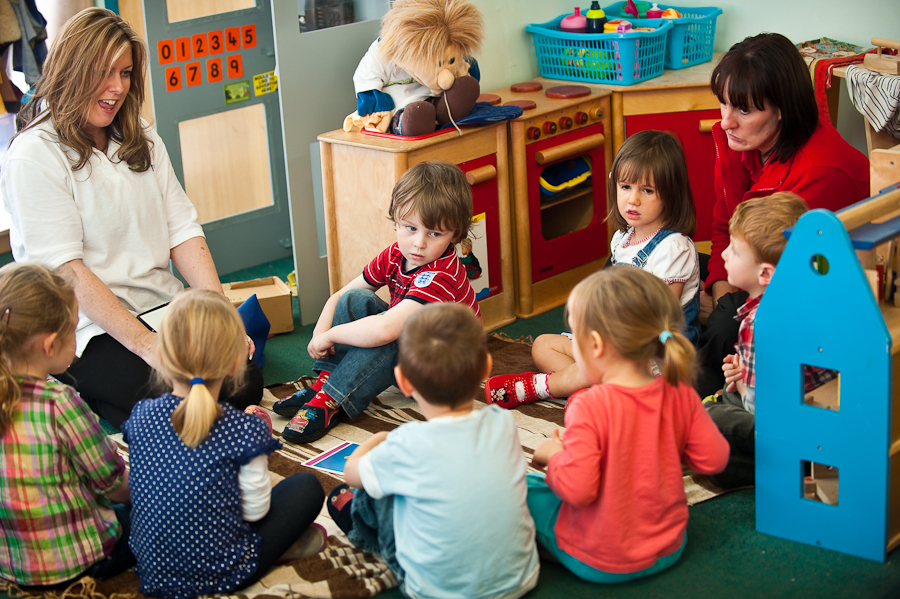
We have been running Teeny Talker sessions at Featherstone and Landywood Children's Centres since January. These sessions are for two year olds. The toddlers have been having fun with games, rhymes, songs, bubbles, stories and snack-time but have actually been working on their attention, listening, turn-taking, verbal understanding and vocabulary as well as expressive language skills. These are all essential components for developing language and communication. 

Many two year olds are not talking as expected and there are many different reasons for this (see last post) e.g. they don't need to because they have everything they want, maybe someone talks for them, perhaps they don't see the need to talk, there could be a general delay or a specific difficulty which will require referral to the NHS Speech and language therapist and further investigation. The groups have been a good way of showing the parents ideas and techniques to help.

Running groups for children this young has real benefits and is great fun.... for me as well as them!


For further information 0844 704 5888 www.private-speech-therapy.co.uk or www.smarttalkers.org.uk


Wednesday, 30 March 2011

My child isn't talking, why is this?


Reasons Behind Speech Delays
Written by the Admin team at YGOY
Most parents eagerly wait for their children’s first words. Hence, it can be worrisome and disappointing if they are slow and don’t utter those precious words. There are several reasons behind speech delays. However, the good news is that many children who seem to talk “late” catch up on their speech without any problems by the time they turn two years old. About one in four children is usually a late talker. Also, most of them don’t need any special help to get them back on the right track. Read on to know about the reasons behind speech delays.
Reasons Behind Speech Delays
Temperament and heredity can hinder in speech delivery, as can a eager parent’s anticipation of their child’s every single need rather than letting them speak for themselves. Here are a few reasons for speech delays in children:
  • Boys – They mostly develop speech later than girls, even though there is generally 1-2 month lag. By 16 months, boys use only 30 words on an average whereas girls use around 50 words.
  • Premature babies – Babies who are born early usually take longer to reach speech development milestones than others. However, by the time they turn two years-old, they catch up with other children’s speech development. According to pediatricians, parents should start counting from the child’s due date rather than his or her birth date, when they are analysing a preemie’sdevelopment. A premature baby born 3 months early than his or her due date might seem like a late talker but in reality it might be progressing fine.
  • Multiples – According to speech-language pathologists, it is estimated that nearly 50% of all multiples have some form of speech delays. Medical intervention during delivery, low birth weight and prematurity can occur more frequently among multiples. This can lead to speech and language delays.
  • Kids with chronic ear infections – If a child has fluid in the ear for months – more importantly in the first year when he or she is beginning to process language – it can lead to poor hearing. Thus, this may lead to delayed speech.
Of course there are other reasons why, such as they don't need to talk, an overall developmental delay, specific language impairment or even ASD. A Speech & Language Therapist would be able to assess and give advice. If you are worried contact your local NHS therapist or www.private-speech-therapy.co.uk


Our Teeny Talkers classes help 2 - 3 year olds who might need a little help www.smarttalkers.org.uk

There are some great articles at http://speechtherapy.ygoy.com


Enhanced by Zemanta

Saturday, 26 March 2011

Talking to your baby


The March theme for the national Hello Campaign is to hi-light the importance of talking to your baby. This video shows this really well.


Tuesday, 22 March 2011

Comments please: What can we do to address the problems??

The last post looked at the fact that children's communication skills are declining and the link between lack of interaction with babies. Many people will have read it and dismissed the ideas because they feel that interacting with  babies is an innate skill and doesn't need to be thought about. The reality, however is that a huge part of society are not interacting adequately with their babies and children. This is not restricted to poorer areas of socio-economic development either as some of the worst cases of language deprivation I have seen are from high income families.


I watched some of Friday's Comic Relief's many videos of abject poverty and utter despair..... and yet ALL the parents were interacting with their babies! There was even an extremely depressing one where the mother was dying. She had no reserves to eat or stand but was still smiling and mouthing to her baby (she had too little energy to vocalise). Unfortunately both mother and baby died after the filming (I'm not watching next year as its too sad..... although I think I said that last year too!).


So why are we failing to do this now? What has changed in the West in 21st century? Are our stresses different, do we take things for granted, have we had parents who didn't bother either so our brains didn't fully develop the area necessary for interaction, empathy and higher level skills?  We can observe the problem but what is the solution? Website like 'talk to your baby' are great but how do we get the people who need to know to read it? Every time I do a  Baby Talk group it attracts those who a already know they want to learn more. The Hello Campaign is only being accessed by those who know about it.


What do you think? I'd love to hear your views please?


Another chance to see the babies at Landywood!!


Enhanced by Zemanta

Saturday, 19 March 2011

ONE IN FIVE NEW PARENTS ARE UNAWARE OF THE NEED TO COMMUNICATE WITH THEIR YOUNG BABY


National Literacy Trust launches ‘Talk To Your Baby’ Campaign 
(www.talktoyourbaby.org.uk)


New research released by the National Literacy Trust today, shows that a fifth of parents-to- be (19%) believe it is only beneficial to communicate with their baby from the age of three months and one in 20 (6%) believe that communicating with their baby is only necessary when they are six months or older, while one in eight parents (13%) believe the primary responsibility for developing their child’s communication skills lies outside the home. 


To mark the ‘National Year of Communication’ as part of the ‘Hello’ Campaign the National Literacy Trust is launching a ‘Talk To Your Baby’ Campaign to educate parents about the hugely positive role they can play in helping their baby develop vital communication skills in the first three years of their lives.  
TLR as crucial to positive child development as TLC Jonathan Douglas, Director of the National Literacy Trust, comments:  ‘The first three years are pivotal to the development of communication skills.  By the age of three a staggering 80% of a child’s brain will be formed.  A child’s brain will never grow faster than at this point in their lives so we’re urging every parent in the UK to use this window of opportunity to talk, talk, talk!   


‘We all know how vital it is to give a young child plenty of TLC.  Our message is that TLR (Talking, Listening and Responding) is every bit as crucial to their future wellbeing.’ 


The National Literacy Trust’s new campaign is launched amidst growing concern about the increasing number of children entering primary education lacking basic communication skills. National Literacy Trust research demonstrates that to reverse this trend parents need to be helped to develop a greater understanding of how vital their role can be and how much their baby is able to understand and enjoy communicating: 
  
• Around a quarter (23%) of parents believe less than a third (30% or less) of their child’s brain has formed by the age of two and 44% of parents believe half or less of their child’s brain has formed when in fact the figure is 70% 
• Over a third (38%) of parents expecting their first baby are unaware that there is any benefit in talking to their baby while it is still in the womb 2
• One in 20 (6%) of expecting parents believe that language skills develop entirely naturally and that they have no role to play in their development 
• While over three quarters (78%) of parents believe it’s crucial for children’s language and speech development to be supported, one in eight (13%) believe the primary responsibility for developing communication skills in their child lies outside the home (eg. With nurseries or healthcare professionals)  


The new five a day rule: 
As part of the Talk To Your Baby campaign the National Literacy Trust is urging parents to 
consciously incorporate some TLR (talking, listening and responding) time with their baby at least five times a day.  Tina O’Brien, star of Waterloo Road and Strictly Come Dancing and mum to Scarlett, age two, comments:  ‘TLR is the new TLC!  You and your child will get so much out of talking together and it doesn’t have to be hard work.  Scarlett and I chat all the time, when we’re shopping, at bath time or even while we’re doing the weekly food shop.  We have such a giggle when we’re talking together and it’s great to know that I’m giving her language skills she’ll have for life.’ 


Get Involved.  Get Talking! 
With 82% of parents saying that they’d welcome more information about the development of speech and language skills in babies, March sees the launch of a brand new website www.talktoyourbaby.org.uk – designed to be a hub of information for parents and carers of babies and young children to access: 
- free information about key developmental milestones of babies
- free activities to stimulate talk with young children including Maisy colouring sheets, 
Barefoot Books video content, podcasts and song and nursery rhyme lyrics 
- hints for incorporating beneficial ‘talking sessions’ throughout a busy day 
- tips for talking to your baby from celebrity mums and mums-to-be 
- video and audio contact throughout for accessibility 
Parents are also being urged by the National Literacy Trust to commit to talk to their baby more by going online to make a pledge, for the chance to win one of 150 free children’s books (from Walker books and Barefoot Books).   
The charity is also encouraging parents with babies and young children to hold a ‘Talk To Your Baby’ party and is providing party packs and inspiration on the 
www.talktoyourbaby.org.uk site, with the first 300 parents to commit to holding a party receiving a ‘Driving My Tractor’ book and CD package from Barefoot Books, worth £6.99.  

A magical moment:  Baby’s first word 
Around a third of parents (31%) expect to hear their baby’s first word between the ages of 6-8 months while just over a third (38%) expect to wait until their baby is around 9 – 11 months.  
Over a quarter (28%) anticipate that a full year will go past before their baby will be able to say a recognisable word, when in fact the average age for the emergence of baby’s first word is typically around 12 months. 


The National Literacy Trust research reveals that the top 10 most popular first baby words (other than Mummy or Daddy) are: 
1. Dog 
2. Cat 
3. More 
4. Baby 
5. Ball 
6. Duck 
7. Teddy 
8. Milk 
9. Gran 
10. Again  
Jonathan Douglas comments:  ‘Few moments in life are more magical that the first time you hear your baby talk.  It’s the start of a lifelong conversation.  But we want parents to understand that talking with your baby doesn’t have to involve words.  Your baby cooing, babbling or even simply holding your gaze is a way of them communicating.  ‘The Talk To Your Baby campaign aims to help parents understand that by responding positively to their baby’s earliest attempts at communication and taking every opportunity to talk with their baby they will build their child’s confidence and help them develop language 
skills that will be with them for life.’ 


Tuesday, 15 March 2011

How to develop your child's phonological awareness skills


Another post from the fantastic Australian team at Talking Matters.

Phonological Awareness is the ability to hear and understand sounds and sound patterns within words.  A child’s phonological awareness abilities at the preschool age have been identified as the biggest predictor of early literacy development.Phonics is the ability to link sounds and letters and develops from phonological awareness. 
Children usually develop the ability to hear syllables, rhyme and beginning sounds prior to beginning school. Having these skills means that your child is ready for formal teaching in reading and writing. In the first year of school children typically develop the ability to break words into separate sounds (segmenting) and blend separate sounds into whole words (blending) as well as learning to link sounds to letters and recognise letter patterns (phonics). They also learn to recognise common sight words.                                           
Ideas for preschool children:
Rhyme. Story books and nursery rhymes are often children’s first introduction to rhyme. Initially children need to be able to recognise if two words rhyme, e.g. “Do “big” and “wig” rhyme?”  Later they will learn how to make their own rhyming words. Young children often enjoy playing with rhyme, e.g. “can I have cheese please” and “look at the funny bunny.” You can help your child learn about rhyming by reading stories and rhymes, listening to rhyming songs and making up your own rhymes.  
Syllables.  This involves being able to break up a word into beats. This is often learned by clapping out the beats in words. Start with your child’s name e.g. “Jess-i-ca” and other family names then move onto other words e.g. “el-e-phant”.
Identifying sounds in words.  Children learn to hear beginning sounds first. Talk about the sounds words start with as you look at books and play games with picture cards.  Look for other things that start with the same sound as your child’s name. Later look for and match other things with the same beginning sound. Once your child is skilled at listening for beginning sounds (they most likely have started school by now) you can listen to end sounds and later middle sounds (use simple words with three sounds such as “cup”).   
Ideas for school aged children: 
When children can hear individual sounds they can learn to: 
Blend sounds to form words. Break down words into sounds (not letter names or spelling but the sounds you can hear e.g. “m-u-g” not “em-you-gee”) and see if your child can work out what you are saying e.g. “can you pass me a c-u-p please”. Make it a game and praise your child for success or for trying.  Look at a book and see if your child can point to the picture that you sound out.  Sound out your child’s name when you call them.  
Segmenting words into separate sounds. Next your child can learn how to break words into sounds all by themselves. This is a skill which is needed for writing and spelling. Try the above activities and see if your child can break up words for you to guess.
Manipulating sounds. Once your child can break words down into sounds you can try:
  • changing sounds in words, e.g. changing the first sound in “pet” to make “get” or the last sound in ‘pet’ to make ‘pen.’
  • re-ordering sounds in words, e.g. re-ordering the sounds in ‘pan’ to make ‘nap.’ 
  • removing sounds in words, e.g. ‘spoon’ without the ‘p’ says ‘soon.’
By now your child is well on their way and can probably recognise letters so magnetic letters are a fun way to develop these skills. Once your child has mastered these skills they are well on the way to being skilled in the early stages of literacy. 
What else can I do?
  • Log into the “plus” section of our website and download free ideas and activities to develop your child’s understanding of rhyming, syllables, beginning and end sounds, segmenting and blending.  Just go to the “phonological awareness” section.http://plus.talkingmatters.com.au/families
  • Look at the Reading Doctor program in the “resources” section of our website as this is a program designed by a speech pathologist to develop phonological awareness and phonics skills. http://talkingmatters.com.au/resources/software
  • Look at the “ready to read” program at Talking Matters which teaches phonological awareness skills and oral language skills to help with the development of literacy. If this program may suit your child contact the office for more details. http://talkingmatters.com.au/therapy/reading
If you are concerned that your child may be having difficulties consider an assessment by a speech pathologist. For details about assessments at Talking Matters see our website http://talkingmatters.com.au/therapy/assessment or contact a speech pathologist in your area.
Talking Matters Team


Enhanced by Zemanta