Saturday, 8 January 2011

S & L World: A global bulletin for SLT/SLPs

They say that the internet is making the world a smaller place and this has certainly been our experience  I began to use social media as a way of marketing my speech therapy business, Small Talk and also the pre-school groups, Smart Talkers. I knew that social media marketing had become an important part for any business’ marketing campaign, so I set up this blog, created Face Book pages and joined Twitter. I soon realised that people from all over the world were interested in what I was writing. I began to have ‘conversations’ with speech & language therapists and pathologist from the US, South Africa, Australia, Canada, Hong Kong, New Zealand and UAE. We shared ideas, discussed new topics, looked at new innovations, and reviewed some old practises. It brought home how we are all working towards the same aims despite different names or countries.


It's easy to forget that Speech & Language Therapy/Pathology is a profession full of enthusiasm and passion for speech, language and communication with great ideas to share and endless examples of good practise. Here in the UK the Royal College of Speech & Language Therapists publish the excellent Bulletin which is mainly full of British work but I felt there was a need to do an international one. It’s not an academic forum as there is already an international journal; I wanted something informal with features, articles, news stories and interviews with SLT/SLPs from different parts of the world.

A survey by the RCSLT recently showed that 70% of British therapists would go abroad to follow their career, so this magazine will help therapist/pathologists to see what’s going on in different countries. This will undoubtedly help in the transition from one country-base to another. 

S & L world will be published quarterly and is available on-line by subscription only. Small Talk will co-ordinate the publication in conjunction with Ray Wellington and his team Milton Bayer Communications Ltd, a creative agency from Northampton. It has been launched to co-incide with The Year of Speech, Language and Communication in Britain. 

To access a free first edition please go to www.slworldbulletin.com 


For more information 0844 704 5888 or e-mail info@smalltalk-ltd.co.uk

Enhanced by Zemanta

Wednesday, 5 January 2011

Pay Attention!!

Many people are surprised me when I say I work on attention skills as a speech and language therapist but I feel that it is an important part of my work. If children can't attend and listen then they can't learn. Smart Talkers Pre-School Communication Groups actively seek to develop this aspect.


There are 6 levels of attention which were recognised in the 1970s by Cooper, Moodley and Reynell. They identified ages by which the stages were achievable and by aged 6 it was felt that a child would have fully integrated attention so that they might carry on with an activity while listening to and assimilating information about something different e.g. listening to an instruction about playtime while colouring in a picture. These days this is certainly not expected and an inadequate attention level is one of the biggest problems when children start school.


This ICan Video is interesting and worth sharing.


Saturday, 1 January 2011

Parents are you worried your child might have ASD?

Diagnosis of autism is a very serious issue and one which cannot be made lightly.  It requires a team- approach from suitably qualified and expert professionals including Highly Specialist Speech &Language  Therapists and Clinical Psychologists. These people are few and far between, hence the long wait for NHS appointments.  
Small Talk SLT can offer: 
·         A choice for parents who don’t want to wait 
·         An independent assessment of your child’s strengths and weaknesses with a differential diagnosis 
·         Expert, highly skilled, specialised professionals with many years expert experience  in the field 
·         Comprehensive, detailed analysis using both formal standardised tests and informal procedures 
·         Observations at home, school or nursery 
·         Full interviews with you and your child’s teaching staff 
·         No long waiting lists  
·         Full reports with the findings 
·         A feedback meeting with you detailing our findings and relevant 
  recommendations based on your child and family’s needs 
·         All in accordance with National Autism Plan for Children as drawn up by 
 the National Initiative for Autism Screening and Assessment (NIASA) 
·         Introductory inclusive price for all of the above of £1995.00 (payment 
 plans available) 


We can also offer further follow-up services if necessary or guide you to the  
appropriate National Health Service (NHS) and Education service. Having an 
independent assessment does not mean you have to opt out of the NHS 
systems. (geographical restrictions may apply)
For more information, please ring: 
0844 7045 888 or email: info@smalltalk-ltd.co.uk

Hello to 2011 and greater awareness of speech, language and communication

Happy New Year and welcome to Hello, the National Year of Communication!


Hello, the 2011 national year of communication, is a campaign to increase understanding of how important it is for children and young people to develop good communication skills. In the 21st century, the ability to communicate - to say what you want to say and to understand what other people are saying - is fundamental. Speech, language and communication underpins everything we do in life. Babbling babies do not become talkative toddlers by chance. Communication is a skill that we learn and develop and is something we can all improve.

But did you know that in the UK today over 1 million children and young people have some form of speech, language and communication need? This is at least 2 or 3 children in every classroom – and that’s the children we know about.
Difficulties with communicating can affect children and young people severely and for life. In areas of poverty, over 50% of children start school with delayed language skills. This puts them at a huge disadvantage to their peers as they struggle to learn and make friends.
Hello aims to make communication for all children and young people a priority in homes and schools across the UK so that they can live life to the full.

Small Talk Speech and Language Therapy are supporting the campaign by offering a series of free training sessions which follow the monthly themes hi-lighted by the campaign. I feel that this is a fantastic opportunity to hi-light the importance of speech, language and communication. We all know about dyslexia now which is a problem with written language but the incidence of spoken language difficulties is as high or worse. The general public, however are mainly unaware of the importance of spoken language or the crisis we are facing as skills decline. 

We at Small Talk have been extremely concerned about the problems for a while which led me to create a series of pre-school groups, Smart Talkers Pre-SchoolCommunication Groups which are run throughout Staffordshire and beyond. These are designed to help address the issues involved such as attention, listening, auditory memory, phonological awareness etc and better prepare children for the demands at school.

For more information about the hello Campaign http://www.hello.org.uk or to register your interest in a free information session, contact Small Talk on 0844 704 5888 or enquiries@smalltalk-ltd.co.uk


Enhanced by Zemanta

Wednesday, 29 December 2010

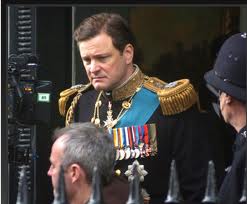
Speech Therapists applaud the Kings Speech

Colin Firth’s performance as the dysfluent prince who ascended to England’s throne in 1936 has generated Academy Awards talk for “The King’s Speech.” The film which portrays King George VI’s relationship with his Australian speech therapist, Lionel Logue (Geoffrey Rush), has also generated unprecedented awareness of stammering/stuttering and the therapists who treat the problem. 
“This movie has done in one fell swoop what we’ve been working on for 64 years,” says Jane Fraser, president of The US Stuttering Foundation, founded by her father in 1947.
The movie depicts Prince Albert’s debilitating stammer and how he overcame it to address the British people on live radio during World War II.
Speech therapists are thrilled with the accuracy of Firth’s portrayal of the condition. He reportedly spent hours getting the dysfluency right as well as imagining the ‘inconsolable despair that those who stutter feel’.
Bertie, as Prince Albert was known before he became King George VI, had to face his fears about talking when his older brother abdicated the throne to marry American socialite Wallis Simpson. 
Early intervention is certainly the key so let’s hope that the film will help with awareness and referrals across the globe. 

Monday, 27 December 2010

ASD: siblings may have subtler problems

Children with autism tend to have brothers and sisters with language delays and other, less obvious characteristics of the disorder.
A teacher and a girl with autism.
iStockphoto.com
Siblings of children diagnosed with autism may benefit for a checkup for related symptoms.
That's the conclusion of a study of more than 1,200 families in theInteractive Autism Network, a national online research registry.
The finding suggests that the genes behind autism in one child may contribute to less serious problems in that child's siblings, says Dr. John N. Constantino, of Washington University School of Medicine in St. Louis, lead author of the study, which appears in theAmerican Journal of Psychiatry.

The study found that in 11 percent of families with a child with autism, a second child had also been diagnosed with the disorder. That's similar to what other studies have found.
But the new study also found that 20 percent of siblings who did not have autism had been diagnosed with language delay or speech problems early in life. And about half of those sibling had speech qualities associated with the autism.
Those qualities may include a lack of intonation, a failure to emphasize important words, or a staccato delivery of sentences, says Rebecca Landa, director of the Center for Autism and Related Disorders at the Kennedy Krieger Institute in Baltimore.
The new study is important because it shows how not only autism, but autistic traits can run in families, Landa says.
"If you have one child with autism, it's important to monitor any other children from infancy," Landa says. And if there appears to be a problem, the child should get a professional evaluation.
Enhanced by Zemanta

Friday, 24 December 2010

Scientific study shows the voice of mothers activate a baby's brain and learning


By Ruben Dagda as seen on examiner.com
Scientists from the University of Montreal and Sainte-Justine Hospital Research Center in Canada attached electrodes to a group of 16 24 hour  old babies to monitor brain activity. After performing the study, the researchers found the following  remarkable result: the voice of  a mother but not of a nurse, doctor or a stranger robustly activate the language processing centers of the brain in the newborn.   In other words, this is the first study of its kind that shows that the voice of mothers is unique and babies inherently recognize their mother's voice possibly even inside the womb. More importantly, theelectroencephalography and MRI studies show high resolution scans that pinpoint the activation of the Wernicke's area of the left hemisphere of the brain, the brain area that is specialized in language development and recognition in human beings.
  The scientists used a couple of controls in their studies to help with the interpretation of their results.  The researchers also involved a nurse who is herself a mother in their studies and also ruled out the "novelty" aspect by having the mother talk to a nurse at regular intervals before birth. Amazingly, their results still held water and proved that a mother's voice is only recognized by babies as the brain scans only showed selective activations of the language areas of the brain.
 Bottomline- 
     It has been well documented that newborn babies do have some innate language capacities. Moreover, infants may not only learn to specifically recognize their mother's voice but also show adult-like responses in the brain to human voice at 7 but not 4 months of age. However,  scientists are only just beginning to understand what the cognitive capacities of newborn babies are and the mechanisms by which babies learn and vocalize language. Nevertheless, what these studies do not currently show is whether the mother's voice is also important for brain development and learning in the child.   Hence, future studies are imperative to determine whether there are any deficiencies seen in babies in which mothers spend less than the average or ideal time talking to their newborn babies.  Moreover, studies like this have never been performed in such young participants which stresses the fact that many exciting and useful scientific discoveries with regards to the developing infant brain can be discovered with such a low number of participants (16) and can help us understand the pathological basis for speech language deficiencies and autism. 
 Moreover, the implications of these clinical findings are broad and other leading hospitals in the nation that perform pediatric research should conduct future studies as to whether a speech-language deficiencies in the infant could partly be a result of low mother to infant contact and interaction, even at such an early age.
 At the University of Pittsburgh Medical Center Children's Hospital, there are a variety of speech language pathology programs that  perform cutting edge research which also involve clinical trials. Right now, Children's Hospital of Pittsburgh is conducting a long term child neurology research registry. This is a large scale research initiative to store and track medical records of infants of all ages for statistical purposes. Moreover, this local clinical research initiative will help to elucidate the  etiology and root causes of many neurological diseases including infant speech language deficiencies.
   
Did you find this article interesting? Will you like to receive more medical technology related news? Then subscribe to my newsletter by clicking on the subscribe button found on the top right hand side of my homepage or follow me on Twitter.
Enhanced by Zemanta